
The ratings agency, in a report, said 'the Reserve Bank of India's deferral of the Basel 3 implementation deadline by a year has eased the pressure on banks to issue hybrid Tier 1 capital in FY15.'

Public sector banks (PSBs) have proposed the Finance Ministry their plan to raise Rs 54,800 crore through Additional Tier-1 (AT-1) and Tier-2 bonds in the current financial year (FY25), 37 per cent more than the Rs 39,880 crore raised in FY24

The Indian banking sector could be due for a rise in profitability after several quarters of net interest margin (NIM) compression. The Q2FY26 results suggest NIMs have bottomed out.

Infrastructure bonds, which were relied upon the most in 2024-25 (FY25) by commercial banks to raise funds through the domestic debt capital market amid lagging deposit growth, seem to have lost their sheen in FY26. So far in FY26, no bank has tapped the domestic debt capital market to raise funds via infra bonds, and the expectation is that the amount raised through this route will be significantly lower than that last year, unless credit demand picks up.
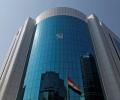
The Securities and Exchange Board of India (Sebi) on Monday relaxed the norms for valuing perpetual bonds. The norms, which had sought to value banks' deemed residual maturity of Basel III additional tier 1 (AT1) bonds as 100-year debt from April 1, were strongly opposed by the finance ministry. In a statement released on Monday, the regulator said the maturity would be 10 years until March 31, 2022, and would be increased to 20 and 30 years over the subsequent six-month period.

State Bank of India (SBI) on Saturday reported an almost flat standalone net profit at Rs 17,035 crore for the first quarter of the current financial year. The country's biggest lender had posted a net profit of Rs 16,884 crore in the April-June quarter of 2023-24. The bank's total income increased to Rs 122,688 crore in the first quarter against Rs 108,039 crore a year ago, SBI said in a regulatory filing.
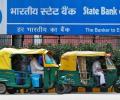
State Bank of India (SBI), the largest lender in the country, has launched a share sale to institutional investors to raise upto Rs 25,000 crore, the biggest qualified institutional placement (QIP) so far by an Indian firm, and has set a floor price of Rs 811.05, which is at a 2.5 per cent discount on Wednesday's closing price.

Indian banks would require additional Rs 8 lakh crore to meet the minimum capital adequacy under Basel III norms, ratings agency Crisil has said.

Says licensing of new banks should be a continuous process instead of the current stop-go system

Commercial banks in India reported a sixth consecutive year of rise in their net profits in 2023-24 while bad loans continued to fall, according to the Reserve Bank of India's (RBI's) annual publication "Trends and Progress of Banking in India", released on Thursday. "Banks' profitability rose for the sixth consecutive year in 2023-24 and continued to rise in H1:2024-25 with the return on assets (RoA) at 1.4 per cent and return on equity (RoE) at 14.6 per cent," the report said.

The government may delay Rs 14,000 crore (Rs 140 billion) fund infusion in the public sector banks in view of volatile market conditions.

This shortfall could continue to hurt loan growth in 2016-17.

State Bank of India (SBI), India's largest lender, is looking to raise Rs 10,000 crore through 15-year infrastructure bonds as early as next week, said multiple sources aware of the development. Market participants expect a coupon in the range of 7.15-7.18 per cent for SBI's upcoming infrastructure bond issuance. This comes as demand for longer-tenor papers has remained strong in recent domestic capital market offerings.

Need to conserve profits to strengthen the capital base is driving the effort.

Finance Minister Arun Jaitley on Saturday proposed to infuse Rs 7,940 crore funds next fiscal in the public sector banks.

Mutual fund houses hold Rs 3,400 crore of Yes Bank's 'riskier' bonds. Reliance MF, Franklin Templeton MF and UTI MF account for bulk of these exposures.

The bank has fixed an issue price of Rs 1,782.74 per share for a preferential stock allotment to the government as part of the capital infusion plan for this fiscal. The SBI board had approved the preferential allotment in October.

Under the Indradhanush roadmap announced in 2015, the government will infuse Rs 70,000 crore in state banks over four years while they will have to raise a further Rs 1.1 trillion from the markets to meet their capital requirement in line with global risk norms, known as Basel III.

The Finance Ministry has asked top rung exectives of United bank of India to furnish bad loan recovery report on daily basis.

Fitch said the full implications of Patel's resignation will only become clearer once there is some indication of the RBI's policy approach under his replacement, Shaktikanta Das

New regime on loans to one party to kick in by Apr 2019.

The decision in this regard, however, is expected to be taken by the new government.

Capital infusion of $30 bn over two years needed amid high dividend payouts and impairment ratios.

Tamil Nadu-based Lakshmi Vilas Bank (LVB) with pre-independence lineage on Friday lost its identity after its merger with the Indian subsidiary of Singapore's DBS Bank. The debt-ridden 94-year old old bank's fate was sealed with Union Cabinet headed by Prime Minister Narendra Modi approving Scheme of Amalagamation on Wednesday.

Finance Minister Arun Jaitley said that at a time when the private sector has been somewhat conservative in investments, public investment always takes the lead.

The Reserve Bank of india is likely to tell state-run United Bank of India (UBI), which has seen erosion of capital due to bad loans and higher provisioning to implement prompt corrective action.

'The macro-economic stresses -- high interest rates, rupee depreciation and capital flows -- have receded now.' 'Interest rates have come down, inflation is down and the rupee has bounced back.' 'If oil prices continue at this level, there will be no vulnerability.' 'Growth is a different story.'


Finance Minister Arun Jaitley sought parliament's approval on Friday to increase the spending budget for this fiscal year by $4 billion, with almost half to be used to inject extra capital into state banks struggling with bad loans.

Indian companies are in a precarious financial position.

It has been a year since the Reserve Bank of India (RBI) initiated prompt corrective action (PCA), an exercise that puts weak banks under central bank scrutiny, against the 94-year-old Lakshmi Vilas Bank (LVB). But recently, this low-profile Chennai-headquartered bank found itself attracting some unwonted publicity when 60 per cent of its shareholders voted against a proposal to re-appoint seven directors, including one of the promoters, K R Pradeep (who holds around 2 per cent), and the company's managing director & chief executive officer S Sundar.

The country's largest lender State Bank of India will get the largest sum of Rs 8,800 crore as government's capital infusion.

Sensex catapults 1,241 points and Nifty vaults 382 points in two sessions in a row.

Banks are in need of government support to manage the stressed assets

"Fitch Ratings has placed Punjab National Bank's (PNB) Viability Rating of 'bb' on Rating Watch Negative (RWN), following the large fraud reported by PNB," the US-based agency said in a statement.

Sweden has the world's highest negative rate.

The most preferred CoCo bonds are those through which banks raise their additional Tier-I capital.

The Sensex had bounced back with gains of 94 points or 0.3%

'The RBI has not allowed any commercial bank to fail in the past three decades.' 'It has always played the role of a matchmaker, but this is the best deal it has stitched,' notes Tamal Bandyopadhyay.

Over the short to medium term, valuations are more likely to move down than up.
 © 2026 Rediff.com - Advertise with us - Disclaimer - Privacy Policy - Sitemap - Feedback - About us - Terms of use - Grievances